
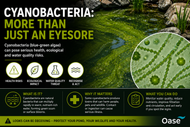
Cyanobacteria: More Than Just an Eyesore
Published by Oase on 27th Jul 2026
Cyanobacteria: More Than Just an Eyesore
Cyanobacteria, often referred to as blue-green algae, are not merely an unattractive nuisance
in water bodies — they pose serious health, ecological, and legal risks that demand immediate
attention. Their presence in lakes, ponds, and reservoirs is increasingly common, especially
during warm, nutrient-rich conditions. But ignoring them can have grave consequences.
Obligations and Responsibilities
In the UK, any suspected cyanobacterial bloom must be reported to the Environment Agency
via their 24-hour incident hotline (0800 80 70 60). Water managers and landowners are
responsible for:
• Restricting access to affected water bodies.
• Posting warning signs to alert the public.
• Controlling discharges and runoff that may exacerbate the bloom.
• Assessing risks to people and animals.
Failure to act can have serious ramifications. If a pet dies or a person becomes ill due to
exposure, the responsible party may face liability for negligence or breach of duty of care.
How to identify Cyanobacteria
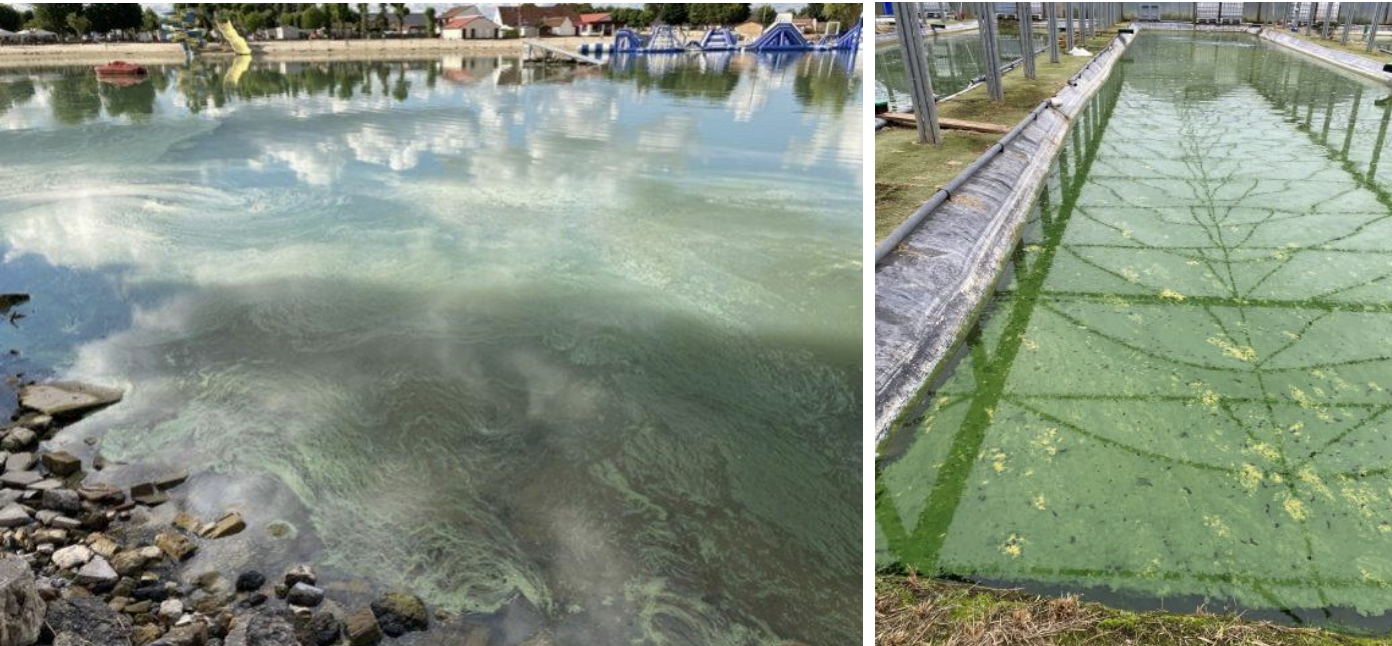
• Cyanobacteria confirmation requires testing however visual identification includes:
• A blue green hue.
• A “unmixed paint” appearance on the surface.
• Small “pea soup” like particles suspended in the water column.
• Often has a “musty” odour
While Cyanobacteria is often called blue green algae it can also appear as red or sometimes
even purple.
Immediate Actions When Cyanobacteria Is Suspected
• If a bloom is suspected:
• Stop all access to the water immediately.
• Pets that come into contact should be taken to a vet without delay.
• Humans exposed should wash thoroughly with clean water and seek medical advice.
• Do not swim, fish, or allow animals to drink from the water.
Symptoms of Cyanobacteria Exposure
In Humans:
• Skin rashes, itching, or blisters
• Eye irritation (conjunctivitis)
• Nausea, vomiting, diarrhea
• Headache, fever
• Liver damage (from hepatotoxins like microcystins)
• Neurological symptoms: tingling, numbness, speech disturbances
In Pets (especially dogs):
• Vomiting and diarrhea
• Excessive salivation
• Muscle tremors or seizures
• Paralysis
• Respiratory distress
• Death (can occur within hours)
In Fish and Aquatic Life:
• Suffocation due to oxygen depletion
• Mass die-offs
• Disruption of reproductive cycles
The Role of Sediment and Phosphate
Cyanobacteria thrive in nutrient-rich environments, particularly where phosphate levels are
high. Even when external pollution is controlled, internal loading from sediment can sustain
blooms. During bloom events:
• Organic matter from decaying algae releases orthophosphates.
• These phosphates diffuse from sediment into the water, fueling further growth.
• Iron-bound phosphate in sediment can be released under low oxygen conditions,
exacerbating eutrophication.
Disruption of pH and Oxygen Balance
Cyanobacteria significantly alter water chemistry:
• Photosynthesis during daylight raises pH levels, sometimes making water highly alkaline.
• At night, respiration and decomposition consume oxygen, leading to hypoxia or even
anoxic conditions, which can kill fish and other aquatic organisms.
This fluctuation in pH and oxygen destabilizes aquatic ecosystems and makes water unsuitable
for recreational or agricultural use.
Ignoring cyanobacteria can result in illness, death, environmental degradation, and legal
consequences. Awareness, monitoring, and proactive management are the keys to protecting
both people and nature.
What Can You Do?
Oase Water technology provides both immediate treatment and long-term prevention.
Direct Treatment with CyanoClear
CyanoClear can be used as a rapid response treatment for blue-green algae. The product is
mixed into a solution and spread evenly across the water surface. It reacts within hours to
treat both the cyanobacteria and the toxins they produce. Best results are achieved when
applied at the earliest signs of algae growth. CyanoClear uses mineral-based ingredients and
does not contain harmful materials such as copper, making it safe for fish, animals and the
wider aquatic ecosystem.
Prevention with SeDox Max
Prevention is always better than cure.
Blue-green algae typically develop where nutrient levels are high and dissolved oxygen levels
are low. SeDox Max can be applied proactively to help protect a waterbody from
cyanobacterial growth. The product reduces nutrient availability while increasing oxygen levels
within the water and sediment interface. By addressing the root causes of blooms, SeDox Max
helps create conditions that are far less favourable for cyanobacteria and supports long-term
water quality improvements.
Conclusion
Cyanobacteria are a public health hazard and ecological threat. Early intervention with
CyanoClear combined with preventative management using SeDox Max can help protect
aquatic ecosystems, animals and people while reducing the risk of future outbreaks.
Ignoring cyanobacteria can result in illness, death, environmental degradation, and legal
consequences. Awareness, monitoring, and proactive management are the keys to protecting
both people and nature.